Showing posts with label film review. Show all posts

Saturday, November 19, 2011

A History of Cinema in China and Taiwan


Street Angel 马路天使 directed by Yuan Muzhi 袁牧之, 1937

Mainland Cinema

Chinese cinema got off to a slow start in the first years of the 20th century, beginning by filming local opera in the Fengtai Photography shop in Beijing in 1905, then quickly moving to Shanghai in 1909.  Shanghai, a natural location due to a heavy presence of (mostly Western) foreigners, was to become the Chinese cinema capital for many decades, even having a huge influence on the cinema of Hong Kong and Taiwan.

1916 saw the Hui Xi production company’s first fully locally-funded effort with Wronged Ghosts in an Opium Den 黑籍冤魂, followed in 1922 by Romance of a Fruit Peddler (劳工之爱情 a.k.a. Laborer’s Love ), a light comedy and the earliest Chinese film to survive until today.

 Romance of a Fruit Pedlar, a.k.a. Laborer’s Love 劳工之爱情, 1922

Early Chinese films were mostly entertainment-based, and consequently given a poor write-up by historians as such, though in more recent years scholars have taken a second look to find much sophistication in that era’s offerings.  Nonetheless, in the 1930’s Japanese aggression prompted more political, progressive films, sparking what came to be known as China’s first Golden Age of film, the resistance cinema of the 1930’s, specifically 1932-7.  Those years included Spring Silkworms 春蚕 (a 1933 adaptation of a Mao Dun 茅盾 short story), one of the earliest of the “leftist” cinema; Sun Yu’s 孙瑜 Big Road  (大路 a.k.a. The Highway) in 1935; and in 1937, Street Angel 马路天使 directed by Yuan Muzhi 袁牧之.

1937 brought the outbreak of full war with Japan, bringing local, free cinema almost to a complete stop; however, Japan fully promoted the cinema industry under occupation, and it thrived as such, albeit in a heavily censored form, pushing Chinese filmmakers to disguise their anti-Japanese slogans by sometimes thinly veiled methods.  Then, from 1946-1949 a “second Golden Age” of Chinese cinema emerged, mostly focusing on hardships of the civil war period.  This included 1947/1948’s A Spring River Flows East 江春水向东流, sometimes referred to as “China’s Gone with the Wind”.  Also released in 1948 was Spring in a Small Town 小城之春, directed by Fei Mu 费穆, later named by the 2004 Hong Kong Film Awards as the greatest Chinese language film ever made.  It’s fate was to be criticized and banned by the Communist government, only to enjoy a revival in the post-Cultural Revolution era.

Spring in a Small Town 小城之春, directed by Fei Mu 费穆, 1948

In October 1946, the Northeast Film Studio 东北电影制片厂, located in Hegang (north of Ha’erbin), took over production from the confiscated Japanese Manchuria Cinema Association 満洲映画協会, and released its first feature, Bridge , in May of 1949.  The studio would later reshape and relocate to become the famous Changchun Film Group Corporation 长春电影集团公司. Later works focused largely on women as heroine fighters, workers, martyrs and sufferers, a trend of perhaps misplaced feminist sentiment that would last right on into the 1980’s, the next period of Chinese cinema to really leave a mark for itself.

The period from 1949-1966 was almost completely dominated by Socialist-Realist “worker-peasant” films (工农兵电影).  In 1951 all pre-1949 Shanghai films were banned, as were foreign and Hong Kong films.  1956 was an important year, in that it saw the inauguration of the Beijing Film Academy 北京电影学院, the origin of so many of the country’s soon-to-be screen legends.

The government takeover of film began with the reaction against Sun Yu’s 孙瑜 1950 film The Life of Wu Xun 武训传, which was viciously criticized by Mao, signaling the takeover of private cinema by the government’s department of Propaganda and later the Ministry of Culture. Within the promotion of “revolutionary realism”, various sub-genres emerged, including village films, national minority films, spy/espionage films, revolutionary/war films, films with industrial subjects and adaptations of May 4th literature.

During the 100 Flowers Movement (1956-1957), state-control of cinema was somewhat relaxed, and new techniques and themes emerged, including criticism of Communist bureaucracy and heavy-handiness, only to be cracked down on again in the Anti-Rightist movement.  The Great Leap Forward brought a push for more production (at fewer costs—resulting in crude, hurried productions), and later the 10-year anniversary of the PRC yielded a state-sponsored improvement in production techniques.
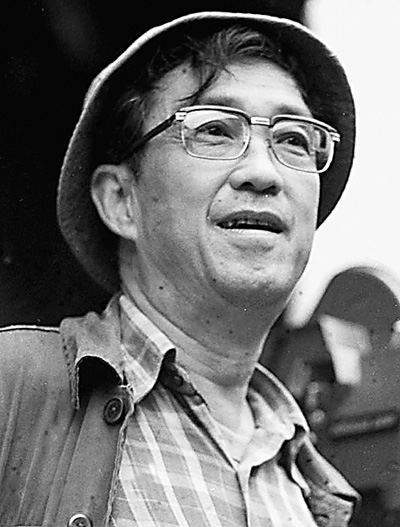
director Xie Jin 谢晋

1960-1966 is referred to as the Classical revolutionary period, the films of which are often called simply “red films”.  The important director Xie Jin 谢晋 captures the context of the era.  As Esther Yau writes,

Xie Jin, who emerged as a new talent in the late 1950s, demonstrated exemplary skills in adapting traditional and Hollywood type narrative and characterization strategies to revolutionary contexts. His military film Red Detachment of Women ([红色娘子军], 1960) incorporated thriller-type elements and exploited the ‘exotic’ details of southern China; while Stage Sisters ([舞台姐妹], 1964) was a finely crafted, melodramatic character study of two female opera singers.”

Three Monks 三个和尚, 1980

Animated films using a variety of folk arts, such as paper cuts, shadow plays, puppetry and traditional paintings, also were very popular for entertaining and educating children. The most famous of these, the classic Havoc in Heaven 大闹天宫 (in two parts, 1961 and 1964), was made by Wan Laiming 万籁鸣 of the Wan Brothers 万氏兄弟 and won Best Film award at the London International Film Festival. Additionally, two animated ink and wash films (水墨动画片), Where is Mama? 小蝌蚪找妈妈 (1960) and The Flute of the Cowherd 牧笛 (for the second half, click here), co-directed by the classic Chinese animator Te Wei 特伟 in 1963, captured the art and poetry of Chinese brush painting.

During the Cultural Revolution, cinema production was stopped except for ten revolutionary opera 革命样板戏 films (including Taking Tiger Mountain by Strategy 智取威虎山, heavily controlled by Mao’s wife, Jiang Qing), and older films were pulled from circulation, while many writings on cinema were destroyed.

Taking Tiger Mountain by Strategy 智取威虎山, 1970

After 1973, film production slowly resumed, and in 1981 China began the Golden Rooster Awards 金鸡奖 for film.  The period between 1977-1984 was marked by “scar films” 伤痕电影, part of a wider artistic movement dealing with the Cultural Revolution’s effects on society, at the same time more or less ending the eulogization of peasant workers at the expense of intellectual characters, most notably, perhaps, in Xie Jin’s  Hibiscus Town 芙蓉镇 in 1986.

1984 marked the start of a new chapter, in which Wu Tianming’s 吴天明 Life 人生 began a new era of modern films that focus on the individual, along with Lu Xiaoya’s 陆小雅 Girl in Red 红衣少女 about an inquisitive high school teenager. The switch to a market economy that was slowly integrated into the movie industry resulted in both more freedom for movie makers, and less ability to continue the exploratory techniques of the early 80’s, as an audience-based direction for funding necessitated the increase in popularism to the detriment of artistic experimentation.
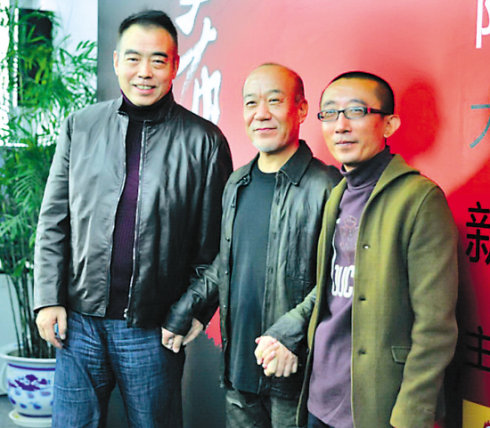
directors 张艺谋 and 陈凯歌

Zhang Junzhao 张军钊, working with cinematographer Zhang Yimou  张艺谋, in 1984 made One and Eight 一个和八个, which moved cinema beyond the then popular “human realism” toward new themes, via a multitude of new techniques.  Zhang Yimou also worked with director Chen Kaige 陈凯歌 on Yellow Earth 黄土地 in the same year. Underappreciated until it received immense praise at the Hong Kong International Film Festival, it is now among the most well known Chinese films in the world.  Finally, Tian Zhuangzhuang  田壮壮"shunned Han enthnocentrism" by focusing on Mongolian culture in 1985’s On the Hunting Ground (猎场扎撒) and 1986’s Horse Thief (盗马贼).

All graduates of the Beijing Film Academy from the same year, these directors and cinematographers became known as the Fifth Generation of Filmmakers, often described as “exploratory (tansuo 探索)” in technique and austere in approach, also acknowledging their general failings in the box office, despite critical acclaim.  Ester Yau writes,

“the Fifth Generation movement enforced a rupture between itself and the types of realism so far established. In relentlessly dismantling the language and ideology of an established political culture, the Fifth Generation films renounced the dramatic patterns of both revolutionary and humanist realism; instead, their narrative and formal strategies were critique-oriented. (p. 700)”

However, it wasn’t until Zhang Yimou made the switch to director, combining the more arthouse technique of the Fifth Generation with tales of passion and romance that were more accessible to audiences, that modern Chinese film became more popular at home.

Yellow Earth 黄土地,directed by Chen Kaige 陈凯歌, 1984

The label “Fourth Generation” retroactively refers to the older directors, et al. working in the 1980’s who had received their training before 1966, whose careers had been disrupted by the Cultural Revolution, and whose outlook was more humanist than their austere younger counterparts.  Often focused on women figures struggling in the transition between traditional and modern China (e.g. Huang Jianzhong’s 黄健中 A Good Woman 良家妇女in 1985, and Wu Lan’s 乌兰 1986 film, Girl from Hunan 湘女萧萧), in many of these films, “sexual love has a redemptive value, as it is expressive of individuality and desire to change.  (Yau, p.701)”

Gong Li in Zhang Yimou's Red Sorghum 红高粱, 1988

These directors were able to produce their films largely because of the work of Xi’an’s film studio under the guidance of director Wu Tianming 吴天明, who stated his goal as “to make profit with one hand and take awards with the other”, thus balancing exploratory and popular film, culminating in Zhang Yimou’s Red Sorghum 红高粱 taking home awards from Berlin in 1988.  Then, toward the end of the 80’s, films began to center on life in the cities and Chinese citizen’s ambivalence in a new commodity-driven market economy, especially those films made in Guangdong’s Pearl River Studio.

At this time approximately 20 female directors became active in the male-dominated industry, including Lu Xiaoya 陆小雅, Zhang Nuanxin 张暖忻 , Huang Shuqin 黄蜀芹, Wang Junzheng 王君正 and Li Shaohong 李少红, focusing on the tension between tradition and modernism, including the sexual liberation of women in Chinese society.  One such film was Huang Shuqin’s second, 1993’s Huahun (画魂 a.k.a. A Soul Haunted by Painting a.k.a. La Peinteur, starring Gong Li 巩俐) , which was heavily censored for its scenes of sex and nudity.

In the 90’s, especially in the government’s conservative backlash after the Tiananmen Massacre, there was more pressure to commercialize, especially as the market for film audiences came under pressure from American and Hong Kong videos, among other things.  Also at this time, the CCP began producing and funding epic historic films in attempts to strengthen its image and shape historical narrative, a trend still seen today.
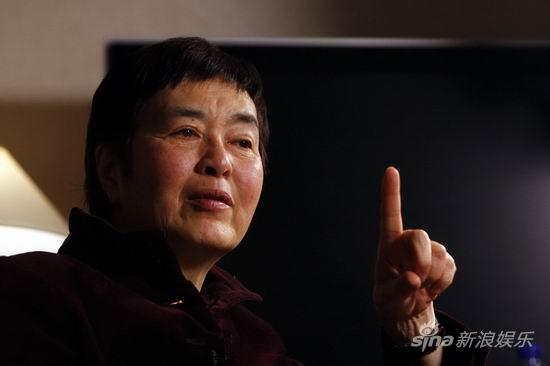
the director Huang Shuqin 黄蜀芹

Meanwhile, a discreet and lo-key documentary movement grew out of the Academy of Broadcasting, including 吴文光Wu Wenguang’s Bumming in Beijing (流浪北京 1988) about struggling artists in the nation’s capital.  Others focused on the lingering impact of the Tiananmen Square protests.

Without access to the studio funding that the Fifth Generation directors enjoyed (many of whom in the late 90’s were becoming international stars in European film festivals), the so-called Sixth Generation of filmmakers have had to independently finance their own features, luckily without the pressure of studio quotas.  In comparison, their films about disillusionment and isolation make the works of Chen Kaige and Zhang Yimou seem commercial in comparison.  (As illustration, Jia Zhangke’s Still Life 三峡好人 was released in 2006, two years after Zhang Yimou’s House of Flying Daggers 十面埋伏, and one year after Chen Kaige’s The Promise 无极.)

The World 世界, directed by Jia Zhangke 贾樟柯, 2004

This generation is best known by directors Jia Zhangke 贾樟柯, Wang Xiaoshuai 王小帅 and Zhang Yuan 张元 , whose 1993 Beijing Bastards 北京杂种 was one of China’s first independent films, starring musicians Cui Jian, Dou Wei and He Yong.  Li Yang 李杨 is particularly well known for his brutal treatment of modern Chinese social problems, such as the female sex trade (2007’s  Blind Mountain 盲山) and the dangerous and corrupt mining industry (2003’s Blind Shaft 盲井).  Zhang Yuan was one of the first mainland directors to openly explore the themes of homosexuality in East Palace, West Palace 东宫西宫 (1996), and Lou Ye 娄烨 is known for his neo-noir treatments of sexuality, obsession and gender, e.g. Suzhou River 苏州河 (2000), which is still banned in China.  Other notable directors include He Jianjun 何建军 and Lu Chuan 陆川, the latter of whom is loosely grouped into the Sixth Generation less for common themes than for chronological purposes.

More recent developments in Mainland film include the extremely low-budget and independent dGeneration (d for digital), and the New Documentary Movement, which goes back to Wu Wenguang’s Bumming in Beijing mentioned above.  Meanwhile, in the last decade filmmakers Feng Xiaogang 冯小刚 and Jiang Wen 姜文 have made popular films that have done extremely well in the local box office.  Feng’s Aftershock 唐山大地震 (2009) and Jiang’s Let the Bullet’s Fly 让子弹飞 (2010) grossed 97.4 million dollars and 111 million, respectively.
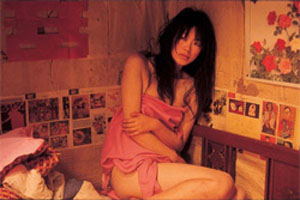
Blind Mountain 盲山, directed by Li Yang 李阳,2007

 -----------------------------------------------------------


Taiwanese “New Cinema”

Early on, largely making kung fu and action epics (which many times rivaled those of Hong Kong), Taiwanese cinema later came to be defined by directors such as Hou Hsiao-hsien 侯孝賢, Tsai Ming-liang 蔡明亮 and Edward Yang 楊德昌.  

the director Edward Yang 楊德昌

Early Taiwanese cinema was dominated by the themes and styles of its Japanese occupiers, notably including the narrated silent-film genre, benshi (弁士), renamed benzi in Mandarin.  After the Chinese civil war, and the arrival of the Kuomintang, most films between 1949 and the mid 1960’s were made in Taiwanese.  The KMT’s policy of promoting Mandarin, and for a time outlawing Taiwanese, led to a quick decline, with the last entirely Taiwanese-language film made in 1981.  Then in 1963, the government introduced the “Health Realism” movement, which strove to implement societal morals through cinema.

In the late 1970’s, seeking to distinguish itself from mainland China, Taiwan launched a “back-to-roots” cultural exploration that gave rise to the “New Cinema” movement of the 1980’s.  The emergence of hsiang-t’u (郷土: nativist) art, following the expulsion from the U.N., the denial of participation in the Olympics, and the severance of diplomatic ties with many nations, sparked an introspection breaking with the tradition of mainland exile literature, Western-influenced elite styles, or popular commercialism that had thus far dominated the island.

City of Sadness 悲情城市, directed by Hou Hsiao-hsien 侯孝賢, 1989

The movement in film began with 1983’s The Sandwich Man 兒子的大玩偶 (a.k.a. His Son’s Big Doll), adapted from Huang Ch’un-ming’s 黃春明 novellas, and In Our Time 光陰的故事, a 1982 film directed by Edward Yang, Te Chen-tao, I Chen-ko and Yi Chang.  The films, among other things, explore the socio-economic life of country people, as well as poor urban-dwellers, in Taiwan’s changing society.

Most of the directors of the era were educated in film schools in the U.S.; however Guangdong-born Hou Hsiao-hsien, who fled the mainland with his family after 1949 and grew up with the modernization of the once agriculturally-based island, is one of the few to have not lived abroad.

After three commercial films, in 1983 he made His Son’s Big Doll, in which he began to develop a characteristic style of a laconic and oblique story-teller, downplaying the dramatic by offering leisurely observations of small, everyday occurrences. He favours meditative long takes with a minimum of camera movements, most often in medium or long shot. A favourite technique is to allow the camera simply to stare at an empty room that a character is about to enter or has just left, frequently making masterful use, through the soundtrack, of off-screen space…. His cinematic style has been compared to classical Chinese poetry, to traditional landscape painting, and to Buddhist narrative scrolls. (Yip, p. 712)”  Hou’s 1989 epic City of Sadness 悲情城市 launched him to international acclaim at foreign film festivals, cementing his reputation as the voice of Taiwanese cinema.

Eat, Drink, Man, Woman 飲食男女, directed by Ang Lee 李安,1994

Films of the 90’s and beyond became gradually more accessible to audiences, while retaining much of the themes and styles of the earlier New Wave movement.  Tsai Ming-Liang’s 1994 Vive L’Amour 愛情萬歲 explores the life of Taipei’s urban youth, for example.  However, Ang Lee 安李 is the best known of what is informally called the “Second New Wave”, making films with strong family themes that were praised by both critics and the average movie-goer, beginning with his early films Pushing Hands 推手 (1991), The Wedding Banquet 喜宴 (1993) and Eat, Drink, Man, Woman 飲食男女 (1994).  His 2000 wuxia film Crouching Tiger, Hidden Dragon 臥虎藏龍 popularized for the first time Asian cinema outside Hong Kong among common Western audiences, while at the same time setting off debates in academia on its place among traditional Asian cinema (with its international cast and affected themes that seemed fabricated for Western audiences).

In the late 90’s, Taiwanese cinema took a sharp decline, with box office numbers for domestic films dwindling almost to nothing.  It was not until Wei Tu-sheng’s 魏德聖 2008 polylingual romantic/comedy/music-drama Cape No. 7 海角七號 that any native film enjoyed wide success with audiences, setting off a revival of optimism for the island’s production.  (It is the second-highest grossing film in Taiwanese history, just behind the U.S.’s Titanic.)
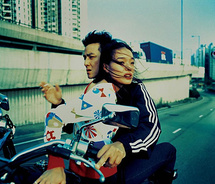
The actress Shu Qi 舒淇 in 蔡明亮Tsai Ming-liang's 2001 Millenium Mambo 千禧曼波


                                                                References

Berry, Chris.  “China Before 1949”, in The Oxford History of World Cinema.  edited by Geoffrey Nowell-Smith, Oxford University Press, 1996.

Li, Cheuk-To. “Popular Cinema in Hong Kong”, in The Oxford History of World Cinema.  edited by Geoffrey Nowell-Smith, Oxford University Press, 1996.

Yau, Esther. “China After the Revolution”, in The Oxford History of World Cinema.  edited by Geoffrey Nowell-Smith, Oxford University Press, 1996.

Yip, June.  “Taiwanese New Cinema”, in The Oxford History of World Cinema.  edited by Geoffrey Nowell-Smith, Oxford University Press, 1996.

various wikipedia articles accessed between October 28th and November 13, 2011.

viewing wish list:

Bumming in Beijing
The Missing Gun (Lu Chuan)
anything by Wang Bing

Tuesday, July 20, 2010

House ハウス (1977 Ōbayashi Nobuhiko 大林宣彦 )


Over the years, any number of films purported to be cult classics have let me down in one way or another.  I always assumed that I saw them beyond a time in my life during which I could have fully appreciated their appeal.  Happily, the 1977 experimental fantasy horror comedy by Ōbayashi Nobuhiko (大 林宣彦) is not one of those movies that passed me by.  Almost never has a film so anticipated, so hyped up, lived up to, nay, exceeded, my expectations as did House.

The plot, perhaps the least important part of the film, revolves around seven girls who have decided to vacation at their ringleader Gorgeous' aunt's house in the countryside.  The wheelchair-bound aunt turns out to be a vampiric ghoul who prays on the girls to restore her youth, which was squandered after losing a fiance in the second World War.  The girls are picked off one by one, despite the long-coming arrival of a male love interest, as well as Gorgeous' soon-to-be mother-in-law.  What ensues are psychedelic freak outs where girls are torn limb from limb by killer pianos, decimated by mattresses and bedding material, or drowned in a room full of blood spewing from an oil painting of the aunt's ever-stalking Persian, Blanche.

Ōbayashi, an early pioneer of experimental film in Japan (and television commercials), is said to have borrowed the idea for the story from his seven year old daughter, and this goes some way toward accounting for the inexplicable happenings of the film (near the end, a would-be "knight in shining armor" is waylaid by a watermelon salesman and ends up becoming a heap of bananas), as well as its surreal pacing and quality.  The film's palette is glossy and hyper-real:  the young girls gaze dreamily into immaculate sunsets, silky black hair blowing in the wind, just moments before fishing decapitated heads from antique wells  The house of the title rivals anything in Kwaidan or Ugetsu for atmospheric effect, and the movie is a slapdash juxtaposition of sugary sentiments and Argento-esque mutilation.  House (or Hausu, as it is often re-transliterated from the katakana transliteration of the English word "house") in some ways sets the standard for creating an atmosphere and following through on it.  All the while, the soundtrack consists of an unrelenting barrage of sound effects and eerie piano loops, with psychedelic rock orchestrated by Micky Yoshino and his band Godiego.


The special effects, which either by choice or by virtue of the film's release date are super lo-fi, are trippy to say the least.  Reminiscent of Ken Russel's Altered States, but delivered in the manner of classic spookshow methodology (at any number of times I felt like I was watching the culmination of all the disjointed segments of Monsters Crash the Pajama Party), House pushes the medium of film beyond its limits, in ways more creative than anything the modern age of CGI entertainment has approximated.  At times the film crackles and burns on the screen, at others a psychedelic montage of disjointed images and swirls of fuzzy color assault the viewer. At one point in the story, our heroine Gorgeous emerges from upstairs to a slowed-down and scratchy motion effect that feels as if the projector is slowly eating the film.  Continuity and lucidity are two qualities that Ōbayashi decided to dispense with early on in the project.

But perhaps the most charming aspect of the film is its unabashed catering to cliches and fetishes, albeit like being force-fed gumballs laced with LSD.  The seven damsels begin the movie in school girl uniforms and before it is out one spends the majority of the action in bow-adorned panties, another is dolled up in watabōshi, and various others are stripped bare for the hungry-eyed spectator.  Painting in heavy strokes of melodrama, while at the same time sending up sundry porno plots (there is a bookish nerd, a cutesy housewife type, a kung fu heroine, a doughy-faced innocent, and so on) that had probably yet to emerge, House is a perfect blend of pop art and traditional horror genre elements--self aware, but also a tribute to the classic haunted house storyline.  It runs the gamut of creepy felines, sinister crones, antiquated manors and plenty of gore to boot.  Later genre entries from the J-horror explosion of the early noughts (St. John's Wort, for one) could have learned a thing or two by following Ōbayashi's example and not taking themselves quite so seriously.


In my book, House is a work of perfection, untouchable to the last detail.  But then it's hard to imagine a movie that combines so many seemingly incompatible pieces of my personality.  Waiting for the late October release from Criterion will be a trial of the will by any estimation.  Fortunately, my first viewing of it was consummated in a slightly run-down, vintage-era theater, where it dumbfounded hordes of ironic hipsters that arrived expecting an ordinary low budget horror film from the 70's and got something more akin to Luis Buñuel channeled through Scary Stories to Tell in the Dark .  Exiting the room, I heard a girl ask her friends what the hell had happened in the last two hours.

You just gazed into heaven's abyss, baby. And your tiny little world will never be the same again.

Wednesday, June 2, 2010

Tokyo Sonata トウキョウソナタ (2008 Kurosawa Kiyoshi 黒沢 清)


It's fairly safe to say that there is no way I could have not liked this film. From beginning to end, everything from pacing to music to cinematography was right up my alley. So consider this review officially biased.

The movie opens in a darkened Japanese apartment in the suburbs of Tokyo. A storm is brewing in the distance, literally and metaphorically, and a gust of wind has blown through the apartment, billowing the curtains and rustling papers across the floor. It ends with a slight breeze, playfully rippling at another curtain, the sounds of Debussy's Claire de Lune closing the film on a tranquil note. Between these extremes, the story unfolds slowly and steadily, building to a surreal crescendo before winding down. The aesthetic is subdued, but at times quietly abrasive, like a loud clap of thunder in a spring storm.

The director, Kiyoshi Kurosawa, is most well known as a prominent figure from the Japanese horror renaissance of the last two decades. His most famous film Pulse (also known as Kairo, it was the basis for a 2005 American remake) is an apocalyptic thriller in which the dead return for the living through the ubiquitous technology that has absorbed the modern world. His 2003 drama Bright Future, a meditation on disenchanted youth, has long been one of my favorite films. Both are grounded in the loneliness and isolation of the contemporary world. Tokyo Sonata may be the culmination of Kurosawa's earlier work: the subtle aesthetic of films like Pulse and Cure, melded with the plaintive view of the disparateness of contemporary urban Japan.

The story begins with the forced resignation of Ryūhei Sasaki (Kagawa Teruyuki 香川 照之), who has grown comfortable in his career as a low-level manager at a bureaucratic office job. After his position is outsourced to China, he spends his days in humiliating interviews for jobs he has no qualifications for, or in unemployment lines, where he links up with an old friend who has also recently lost work. When his friend commits suicide, Ryūhei takes work as a janitor at the local shopping mall, though never fully accepting his fall from grace.

A typical patriarch trying to hold together his crumbling family life, he hides his work situation from his wife Megumi (Koizumi Kyōko 小泉今日子), the latter's days consisting of a lonely routine of menial housework and tending to her unappreciative husband and two sons. The younger son, Kenji is quiet and brooding, and when his father denies him permission to take piano lessons, he uses his lunch money to pay for classes on the sly from a beautiful young instructor who is going through divorce proceedings. Takashi, the older of the two, barely at home and hardly ever interacting with his family, cannot find work and so decides to sign up to serve in the American Army in Iraq. Eventually, everyone's secret is outed, along with their long-suppressed emotions, and the series of events that follows makes for a chaotically brilliant climax.


The technical side of the film is perhaps the most astonishing element. The cinematographer, long-time Kurosawa collaborator Ashizawa Akiko (芦澤 明子,one of Japan's few female cinematographers), alternates between metallic gray views of the Tokyo skyline to cramped sequences in the Sasaki home. Reminiscent of Christopher Doyle's work in In the Mood for Love, Ashizawa frames most of the shots from behind window panes or staircases. The voyeurism of the audience is blocked by these obstructions, just as the emotions of the characters are stifled by tradition and lack of communication. In one scene the family has just seated themselves around the dinner table. We watch from between the rails of the staircase as all wait for word from the father to pick up their chopsticks and begin the meal. Ryūhei takes a gulp of beer, there is an uncomfortable pause, then he imbibes another large gulp before announcing "let's eat". The dinner scene is shot in one long take, never drawing away from, but never too close to, the tension that thickens the air around the table. The score, written by composer Hashimoto Kazumasa, sounds like 1960's minimalism, in the vein of Terry Riley or early Philip Glass. It is the perfect fit for the mood of the film, melancholy and staccato, a subtle but steady accompaniment to the story.

Tokyo Sonata is a pensive film, but the viewer never feels overwhelmed by the events in the Sasakis' lives. In a speech given at the premiere in Japan, Kurosawa noted how audiences in Europe and the US told him they could identify with the difficulties and disappointments that unfold on screen. This is true. Like all good films, Tokyo Sonata is grounded in the local circumstances of its characters' lives, but is universal in the scope of its artistic vision. The sadness in the movie is catharsis for a society, and a world, grappling with the pressure and alienation of modern life. Kiyoshi Kurosawa captures this theme with the skill of a true auteur.

Official Website

Thursday, May 27, 2010

Departures おくりびと (2008 Takita Yōjirō 滝田 洋二郎)

(N.B. Mild spoilers abound.)


The opening shots of one-time pink film director Takita Yōjirō's Departures are shrouded in a thick haze of snow flurries, reminiscent of the first scene of Fargo, but switch the flatlands of North Dakota for the scenic valleys of rural Japan. Parting this wall of white is a solitary hearse, the passengers of which we follow along to their destination: an encoffining ceremony for a recently deceased daughter of a local village family. Except that she turns out not to be a female at all. The solemn ritualistic cleansing and enrobing of the corpse is abruptly halted by the younger specialist's discovery, which shatters his image of the otherwise attractive young "woman" and sets the tone for the majority of the movie, reverent but humorous at the same time.

This part of the funerary ceremony in Japan, which cuts across all religious denominations Eastern and Western, requires sensitive and skilled hands. After sponging the body's exposed skin with a sanitized cloth, the clothes are removed from under a silken cerement, and once the rest of the body is cleansed, new clothing and make-up is applied to restore the departed to look as if in their prime, before being lowered into a coffin and transferred to the cremation retort. Our startled handler, Daigo Kobayashi (Motoki Masahiro 本木 雅弘), called an "NK agent" after the Japanese term nōkan 納棺, has recently returned to his hometown and fallen into this line of work after plans to become a symphonic cellist in Tokyo failed to pan out. Though the job is elevated to an artform, revered by all mourning Japanese (the bereaved often tearfully proffer gifts of gratitude to the agents), it is nonetheless beneath an individual's dignity to fulfill this function. While the protagonist, on his journey from resigned acceptance of the position to genuine veneration of its rites, attempts to hide the nature of his business from his dotingly smiley wife (Hirosue Ryoko 広末涼子) , soon word of his profession spreads around town, deflecting old acquaintances and finally driving away his homemaking wife as well.

Though the movie, which won the 2009 Academy Award for Best Foreign Language Film, has its moments, for the most part the sequences develop like a feature-length Japanese soap opera. Despite the stunning scenery of Yamagata, nestled in the shadow of Mount Fuji, our emotions are piqued by little else on the screen. The story develops along largely predictable lines: As Daigo develops an immense pride for the work that previously had driven him to wretch before every meal, he ostensibly has to choose between his ordinarily submissive wife, and his newfound pride for the profession. It turns out he must have known all along how to play his cards, as his wife dutifully returns with only the pretense of a fight. Moreover, when characters pass away it feels more like a familiar plot turn than any great loss to shed tears over. By the end, a longstanding family sub-drama is even resolved, with no outstanding tensions left remaining.


Adding to the semblance of the daytime drama, most characters overplay their roles: at some of his more dejected moments, our leading man pulls faces that remind me of the Korean screwball comedy Sex is Zero. (In the scene where Daigo discovers the symphony he has worked so hard to be a part of is dissolved, he draws a quick face that might have been accompanied by the boing of a burst Slinky.) This makes it hard to sympathize for the character when he is supposed to be duly enduring the down sides of the story. The wife figure, though sometimes charming, is played to bubble-gum effect, so fixated on an overstretched smile and crescent-moon eyes that she grins in her sleep.

The one exception is the other staff at the NK agency, especially Shōei, the proprietor (veteran actor Yamazaki Tsutomu 山崎 努, perhaps known best for his role in Itami Jūzō's Tampopo). Tall and aquiline, his presence exudes at both times a sense of gravity and humanity mostly lacking elsewhere in the story. Aloof throughout most of the film, he plays the traditional sensei role to perfection, all the while appearing to tolerantly guide the actor Motoko as much as the character Kobayashi. The high point may be the private puffer roe dinner shared by the two agents, in which Shōei dryly opines to his apprentice on the themes of work and mortality.

Departures isn't a bad film to relax with after a long day. The long shots of the Japanese countryside are beautiful, and toward the end, most of its shortcomings can be conveniently ignored if one is willing. But in a country famous for Ozu Yasujiro's light-hearted family dramas and Akira Kurosawa's humanistic storytelling, Departures feels more like a spin-off with a mildly unconventional theme. Released the same year, Kore-eda Hirokazu's Still Walking (歩いても 歩いても) is a much greater example of the vibrancy that still flourishes in this great tradition.

Monday, May 24, 2010

Still Life 三峡好人 (2006 Jia Zhangke 贾樟柯)

(The following is a movie review I wrote some time back for my brother's blog.)


Over roughly the last decade we have seen the slow decline of some the biggest names in mainland Chinese filmmaking. Luminaries of the fifth generation of Chinese cinema like Chen Kaige and Zhang Yimou have abandoned the simplistic and artful styles that made up films like Yellow Earth and The Story of Qiu Ju, and with perhaps an eye to China’s ever-growing foreign markets, have produced glossy, flamboyant period pieces that are nearly as foreign to domestic audiences as they are to those who flock to them in the West. This vacuum in art cinema has been filled by a new generation of directors who have focused their lens on daily life in a country that is marked by upheaval and perpetual social change stemming from breakneck economic development. The name that has received the most recognition as of late is Jia Zhangke, director of Unknown Pleasures, Platform and The World. His most recent feature length production, Still Life, has taken him from the margins of obscurity into the fold of world cinema, for which he received the 2006 Golden Lion Award at the Venice Film Festival.

Shunning any form of adornment, Jia’s films focus on the daily lives of ordinary people in some of the most underdeveloped regions of China. In Platform, a performance troupe-turned-rock band tours the back towns of north central China, finally ending up in the same place they started. The World follows the daily routines of migrant workers at an ambitious theme park in Beijing, where famous global landmarks are recreated in miniature form for Chinese tourists. Every film captures the mundane life of those people absorbed in a country changing by the minute, but held just outside the benefits which are purported to follow--an endless waiting for something new or something better. Jia’s films unfold slowly with a deliberate pacing similar to Abbas Kiarostami or Hou Hsiao-hsien, marked by understated gestures and austerity, a far cry from Hero or Curse of the Golden Flowers.

Still Life makes its setting in a small town on the Hubei/Sichuan border, currently under destruction for the massive Three Gorges Dam project, which will bring cleaner energy to thousands more Chinese citizens, but has in the process destroyed innumerable local ecosystems and cultural landmarks, uprooting hundreds, if not thousands, of local residents, the subject of a recent documentary Up the Yangtze.


The film opens with the return home of one of the two main characters, Han Sanming, hailing a motor-taxi to his old address, only to find it completely submerged below water. He proceeds to find work with a local demolition crew as he searches for his estranged wife and tries in vain to re-establish contact with his daughter, whom he has not seen for 16 years. Wandering amid the rubble and chaos is the film’s other protagonist, Shen Hong, who is also looking for her spouse, who has been incommunicado for quite some time. Even in the same town, the two’s paths never cross, and when they finally accomplish their missions, the results are anticlimactic at best. In the meantime, they form ephemeral relationships with others amid the disarray that surrounds them.

People wander in and out of scenes as in a Fellini film: a young teenager singing saccharine love songs, a lackluster proprietor of a small prostitution ring, a civil engineer showing off his elaborate light display to a group of businessmen. All the while, there is the noise of sweaty demolition workers toiling in the humid haze amid fumigators and crews marking new buildings for destruction or projecting stages of future water level rises.

The scenes that unfold, less like a movie than the titular style of painting, show a section of society crushed under the boot of so-called progress. Air conditioning here is either absent or useless in the sticky climes of southern China. The music emanating from old radios and television sets is from decades past. When not repetitively hacking away with sledgehammers, barely-clad men sit in idle groups, mechanically wiping sweat from their faces. There seems to be such a tacit acceptance of the tumult that has marked their otherwise monotonous existence, that no one seems to notice, or care, when a flying saucer wobbles in over the mountains and then exits as nonchalantly as it came, or when a building inexplicably rockets itself off into the hazy skyline. In a world coming slowly undone, these are minor details to be observed, and then discarded, before moving on to the next routine task.

But it would be too easy to attribute some air of condemnation originating from Jia’s projects. He never appears to be pointing the finger, or making a value judgment in his films. He merely documents what he sees around him, and does so to aesthetically stunning effect. The subjects and themes may speak to the viewer in any number of ways, but they are, after all, just daily life in a country whose citizens make up over one third of the world’s population.